
Operating Lens
If you want the canonical definition first, read Modelomics Definition.
This is the operating lens.
Founders and operators feel AI through margin pressure, slower decisions, support burden, and the difficulty of keeping the product simple enough to run well. The question is not whether AI is impressive. The question is whether it improves the business without creating hidden cost.
The Wrong Question
Most teams begin with the wrong question. They ask:
- Can we use AI here?
- Can we make it smarter?
- Can we build an agent for this?
- Can we use a bigger model?
Those questions are not useless. They are just incomplete. The better question is: what is the minimum effective intelligence this task needs?
That is the shift.
Why This Matters in a Company
Every company has limited attention, limited money, and limited tolerance for friction.
When you over-allocate intelligence, you pay for it in places that are easy to miss:
- higher inference cost
- slower workflows
- more operational dependency
- more edge cases
- more maintenance
- more confusion in the team
This is Intelligence Debt.
And like any debt, it accumulates.
The worst part is that it often accumulates invisibly.
An AI system can look successful while getting more expensive, slower, and harder to manage every month.
The Five Concepts That Matter
Modelomics starts with five ideas.
1. Modelomics
The overall concept.
It is the discipline of deciding how intelligence should be used, where it should be used, and what tradeoffs are worth making.
2. Minimum Effective Intelligence
The smallest intelligence required to complete a task successfully.
For founders and operators, this is a powerful filter:
if a simpler approach works, use the simpler approach.
3. Intelligence Debt
The waste created by over-allocating intelligence.
If you use more intelligence than a task needs, the difference does not disappear. It shows up later as cost, latency, complexity, and maintenance burden.
4. Return on Intelligence
The business value generated per unit of intelligence spend.
This is the metric that keeps AI honest.
If the return is weak, the use of intelligence is probably wrong.
5. Progressive Intelligence Escalation
Escalate only when lower-cost intelligence fails.
This is the operating rule that keeps Modelomics practical.
It prevents teams from reaching for the most expensive option first.
What Good Looks Like
A Modelomics-minded company does not try to make everything AI-powered.
It tries to make the right things intelligent at the right level.
That means:
- starting with the smallest viable solution
- escalating only when needed
- measuring return before adding complexity
- watching for hidden waste
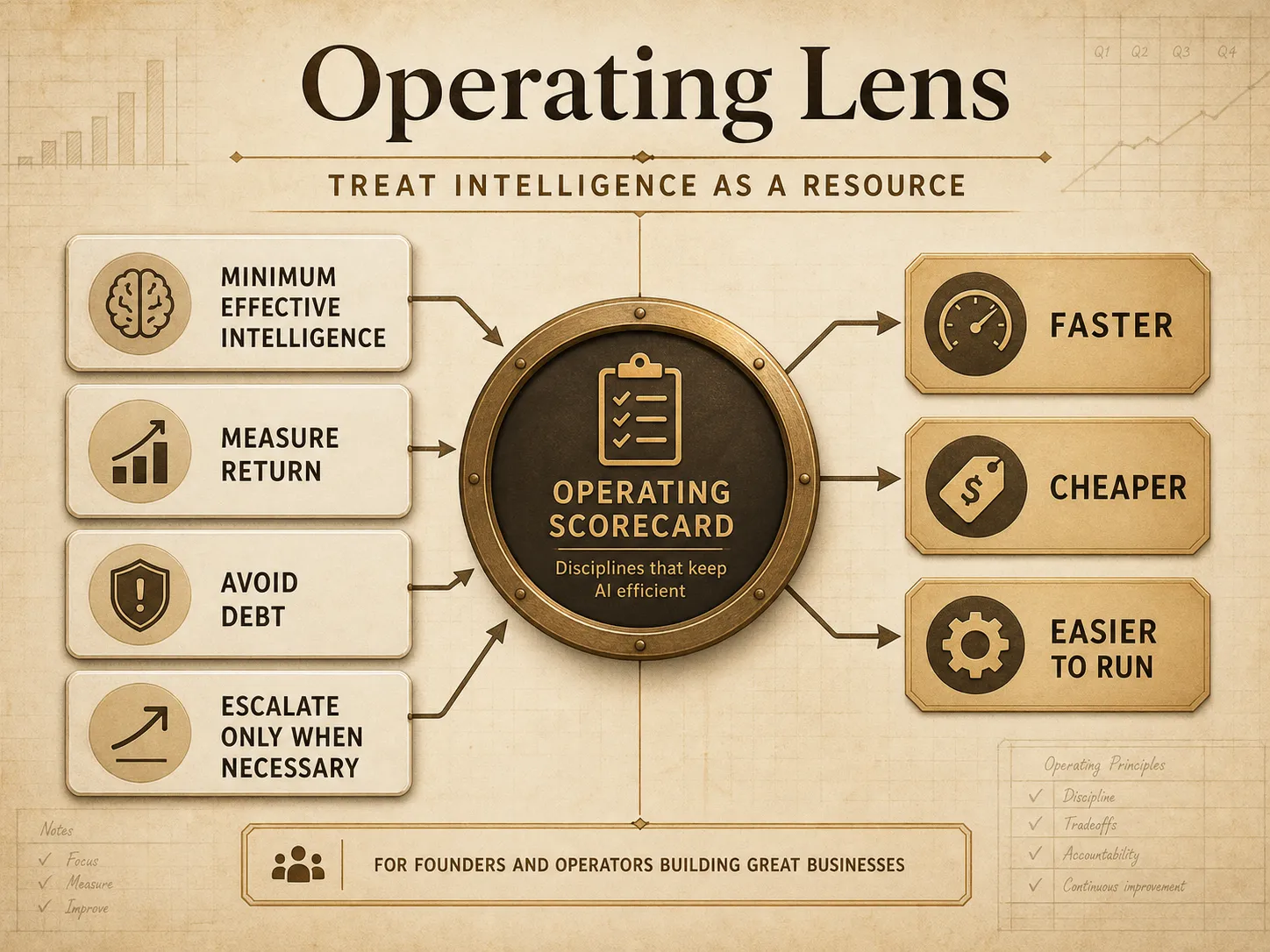
- treating intelligence as a resource, not a vanity metric
This approach is especially valuable for startups and lean teams.
Why?
Because small teams cannot afford to confuse sophistication with efficiency.
The Real Advantage
The companies that win with AI will not always be the ones with the biggest models.
They will be the ones that allocate intelligence best.
They will know when to use AI, when not to, when to escalate, and when to stop.
That is a real advantage.
Not because it sounds clever.
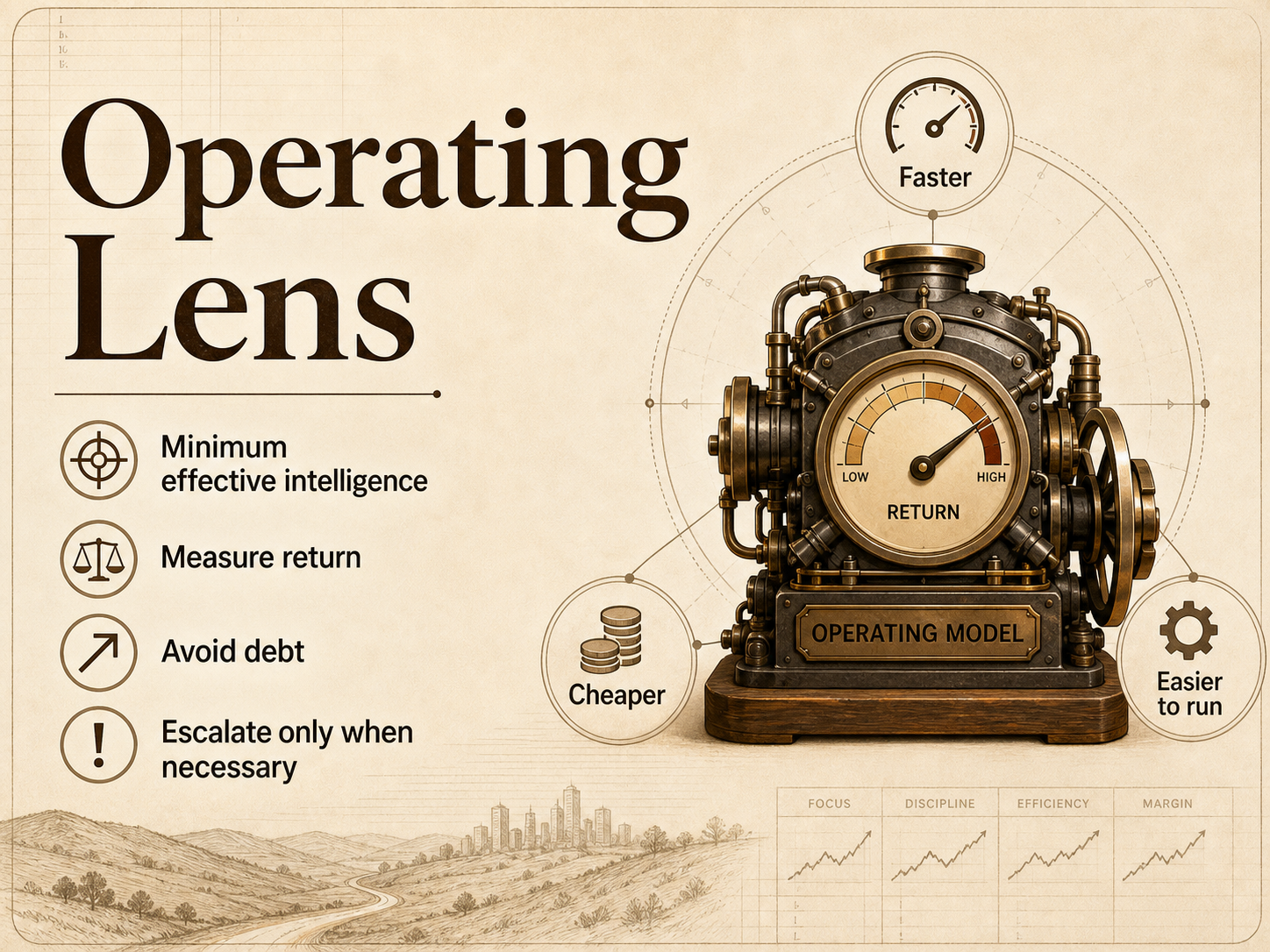
Because it keeps the company faster, cheaper, and easier to run.
Closing Thought
If you are a founder or operator, Modelomics gives you a simple discipline:
use the minimum effective intelligence, measure the return, avoid the debt, escalate only when necessary.
That is how AI becomes an asset instead of a cost center.